In post-apocalyptic Germany, a critically injured boy stumbles through the forest until he reaches a clearing where he collapses. He is discovered by Lukas, an armed survivalist and loner, who decides to carry him through the desolate landscape in search of first aid.
As the journey wears on, the weight of the boy — and of Lukas's own motives — grows heavier. The world around him seems to slip out of shape, and by dawn the cool light of a new day makes his reality clear, though it no longer resembles the world he thought he knew.
Original score composed by Jorge Camacho. Sound recording, mixing and design by Elvin Jay Alfaro. Cinematography by Dominik Friedl.
Dir. Sam W. Harper — 23 min 33 sec
Ssokear, Berlin
The Knot — Mango Films / Gravel Road Productions, New Zealand
Dir. Amarbir Singh
Jorge was invited to compose and sound-design this short film by director Amarbir Singh, shot in New Zealand. A surreal meditation on confronting trauma, the film follows its protagonist through scenarios that draw ever closer to her deepest fears.
For the music, cello recordings were combined with layered feedback harmonies from a six-string bass to evoke confusion and dissonance within the familiar setting of classical composition.
For the sound design, layered binaural recordings were phased against each other, creating spatial voids for background atmospheres.
A four-part documentary series that takes us into the lives of the people from both sides of the line who experienced the Tūhoe raids of 2007, when government forces attacked a remote New Zealand indigenous community in search of domestic terrorism.
An in-depth and personal story, as told by the people of Tūhoe — young adults who were children caught up in the raids, artist-activist Tame Iti, as well as politicians and police officers. Told with retrospective insight, film excerpts and archives along a personal ride deep into the valley.
Original co-composition for episodes 2 to 4.
2023 — Four-part documentary series (4 × 22 min)
ThreeNow, New Zealand — a Wheke Group production, with NZ On Air
DSP Sound is a web-based label releasing compositions that seek innovative approaches to sound design and processing. Works are available for licensing in film, advertising, and commercial projects, and archived on an independent platform with spatial environments and customized playback.
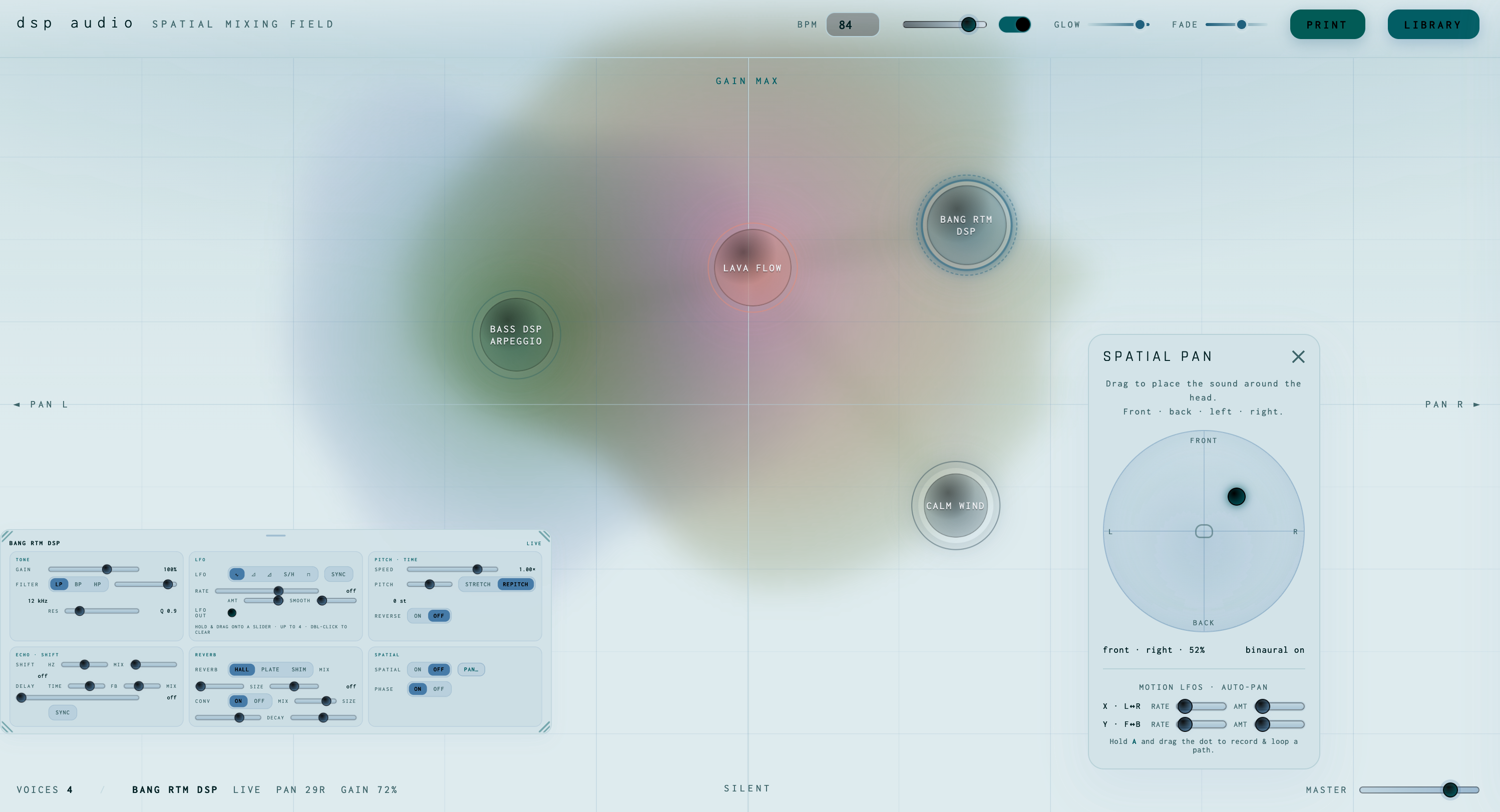
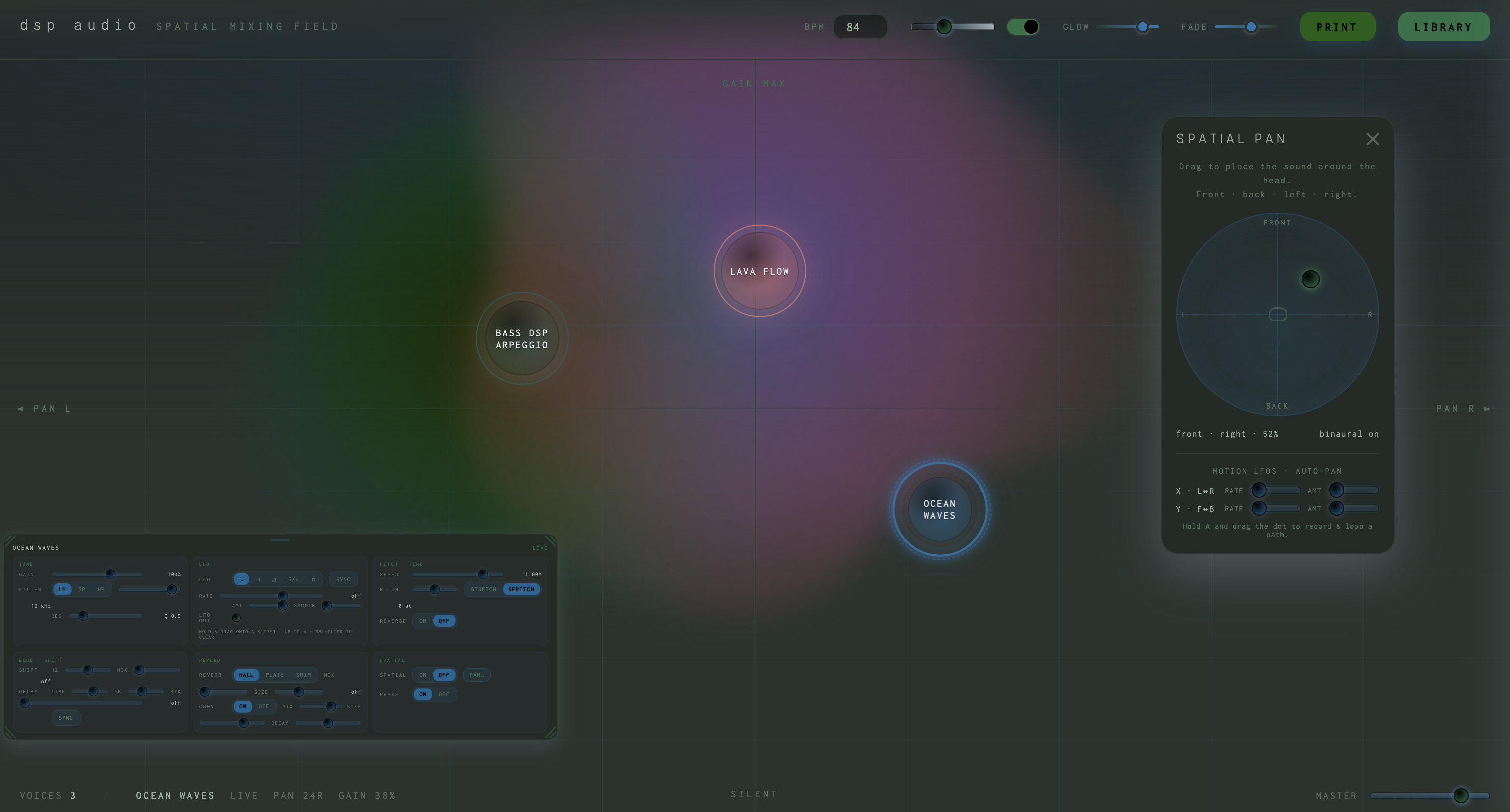
SPF — the Spatial Processing Field — is the instrument that label runs on. It turns mixing into a gesture. Every sound becomes a luminous orb you place by hand across an open field — horizontal is pan, vertical is gain — so arranging the space is writing the mix. Nothing is hidden behind menus; the balance is something you see and move.
Each orb carries a full signal path: binaural automations that orbit a source around the listener's head, cross-phase modulation and cross-convolution that let voices reshape one another, and tempo-locked delays — all feeding a live, audio-reactive glow so the field visibly breathes in time with what you hear.
It runs free in any browser, no install, no account. A native VST plug-in is on the way.
The mixing field — orbs placed by pan and gain, glow tracking live dynamics
Per-orb binaural pan, cross-convolution and modulation routing
usiq began as an exercise in building an audio-visual program capable of generating offspring from a chosen set of rhythm and light patterns — mirroring the way DNA strands recombine, allowing new pairings to emerge while retaining traits from the previous generation.
The result is a Max/MSP program that slices and scans through a user's preferred light and sound patterns, producing new sequences based on the original "genes" of the user. The sequencer uses euclidean distribution, chance and shared automation to achieve patterns newly formed from the sum of their parts.
Each new generation carries a familiarity inherited from its parents while slowly mutating over time into its own "family".
Sequencer — euclidean distribution, scan morphing, probability
Envelope / synthesis section
Full patch architecture
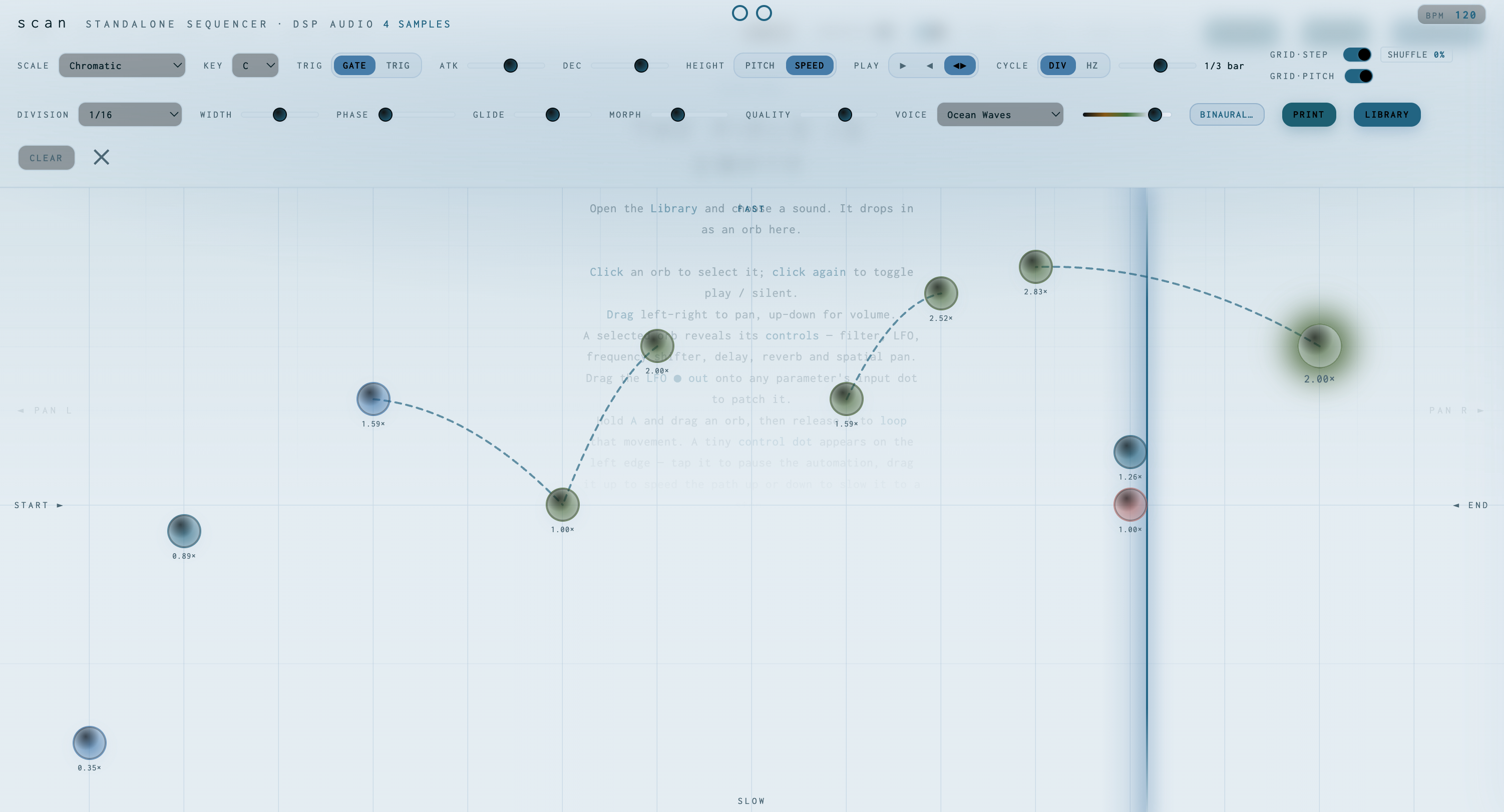
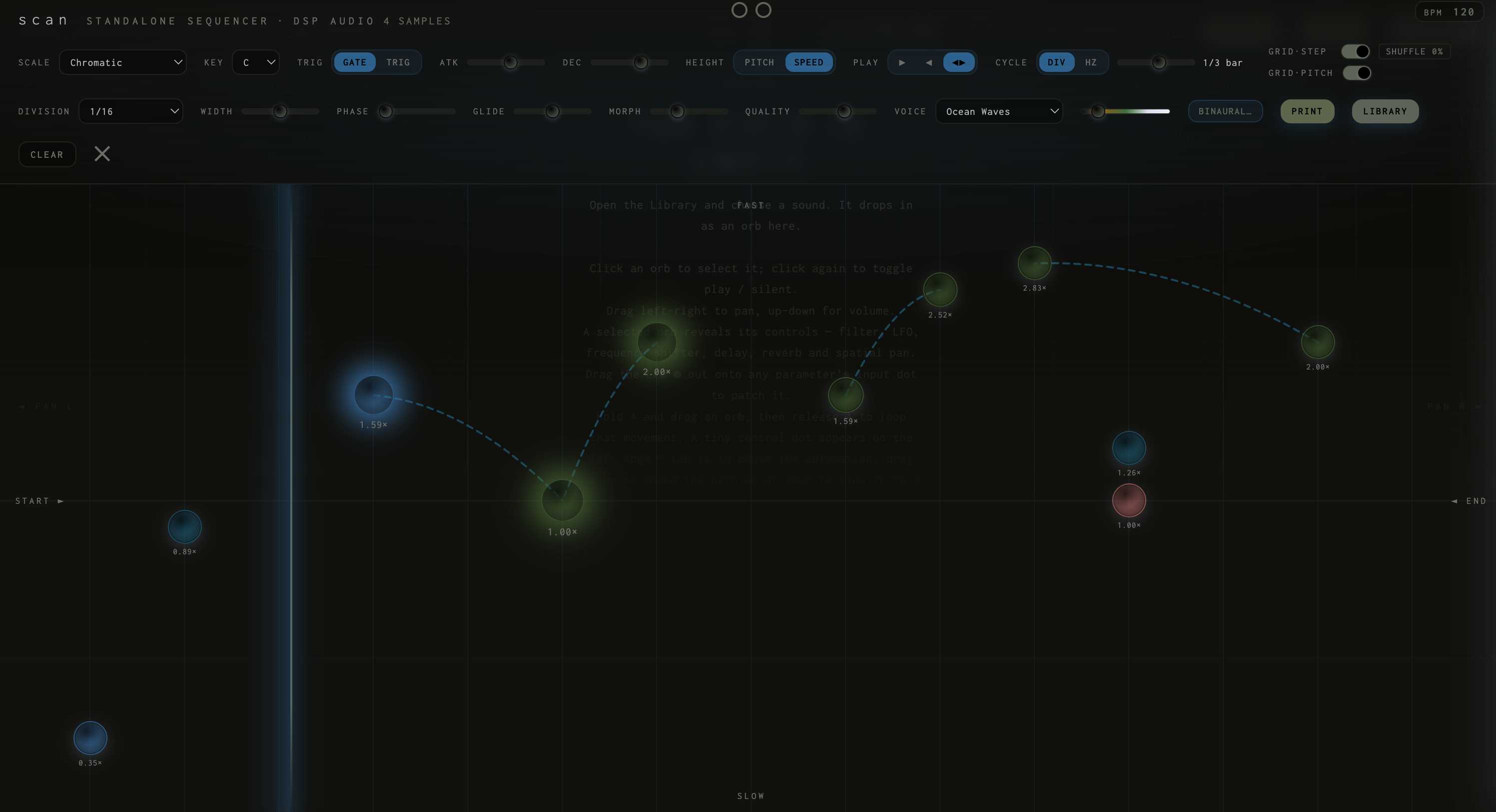
Scan is the standalone sequencer of DSP Sound. Samples are laid out across a single field and a line sweeps across it, sounding each one as it passes and morphing between them in between.
Placement is the score: where a sample sits sets when and how it is read, so sequencing becomes a matter of arranging the field rather than filling a grid.
Like SPF, it runs free in any browser — no install, no account — a standalone instrument today, with a native VST plug-in on the way.
The scanning field — samples placed as orbs, a line sweeping across to sound each one
Placement is the score — a sample's position sets when and how it is read
wrec is a heuristic sound abstractor built in Max/MSP that treats recorded audio as plastic, malleable material. By redesigning the relationship between time and playhead, sounds can be stretched into dense textures or slowed into subharmonic rhythms that no longer resemble their origin.
Pitch and frequency shifting operate in tandem to generate stereo width and spatial depth — experimenting with the plasticity of time as a compositional parameter rather than a fixed axis.
wrec — playhead modulator interface
Full patch architecture
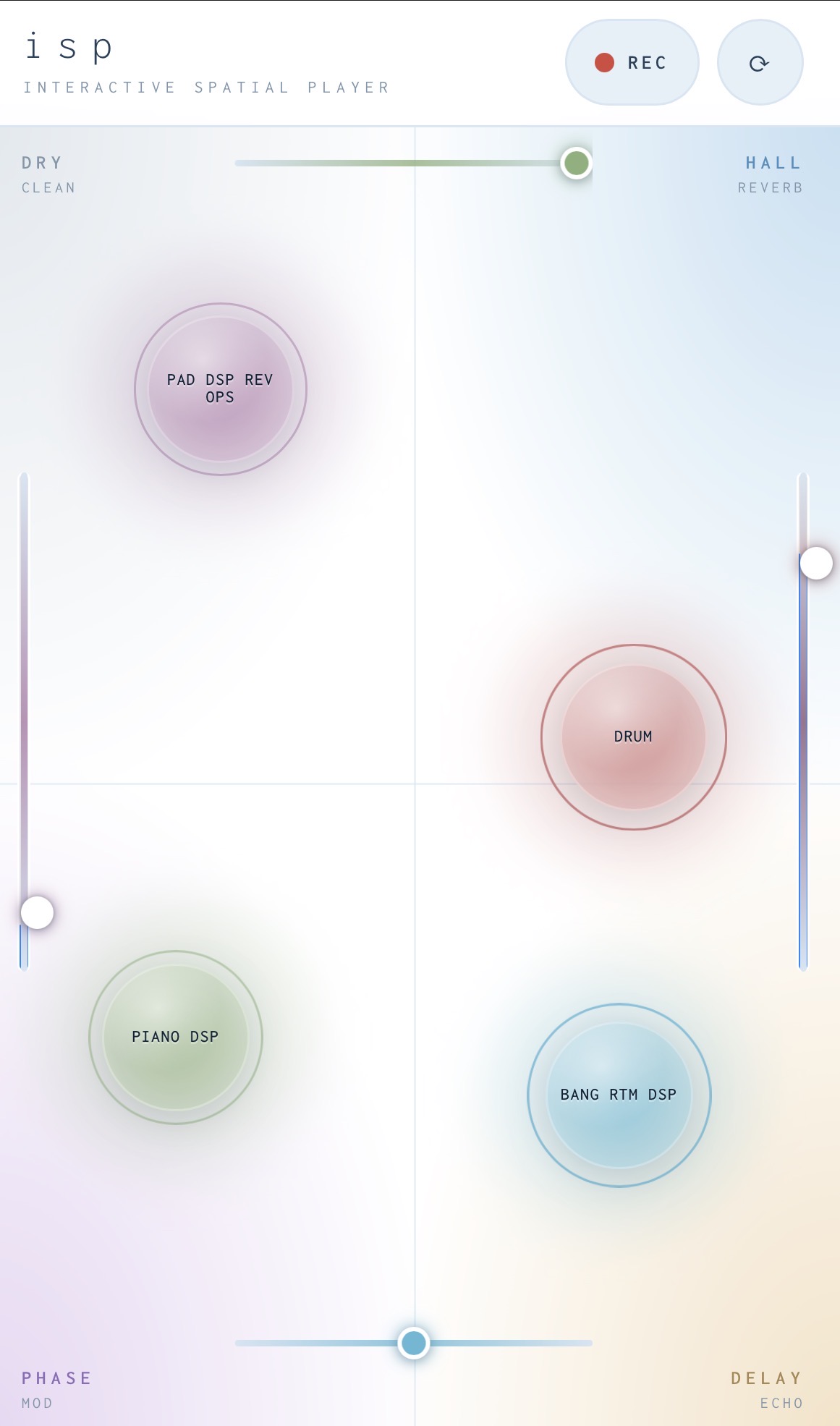
ISP — the Interactive Spatial Player — is the pocket-sized member of DSP Sound, a stripped-back spatial field made for the phone. It opens with four random sounds as orbs and asks you to play the room with your hands.
Drag an orb between the dry, hall, delay and phase-modulation corners to morph its processing; pinch it to pitch it up or down; shake the phone to re-roll a fresh set of sounds; hold and tilt to record a binaural automation that orbits the source around your head.
It runs free in any mobile browser — no install, no account.
Four sounds as orbs — drag between dry, hall, delay and phase-mod, pinch to pitch, tilt to record a binaural orbit
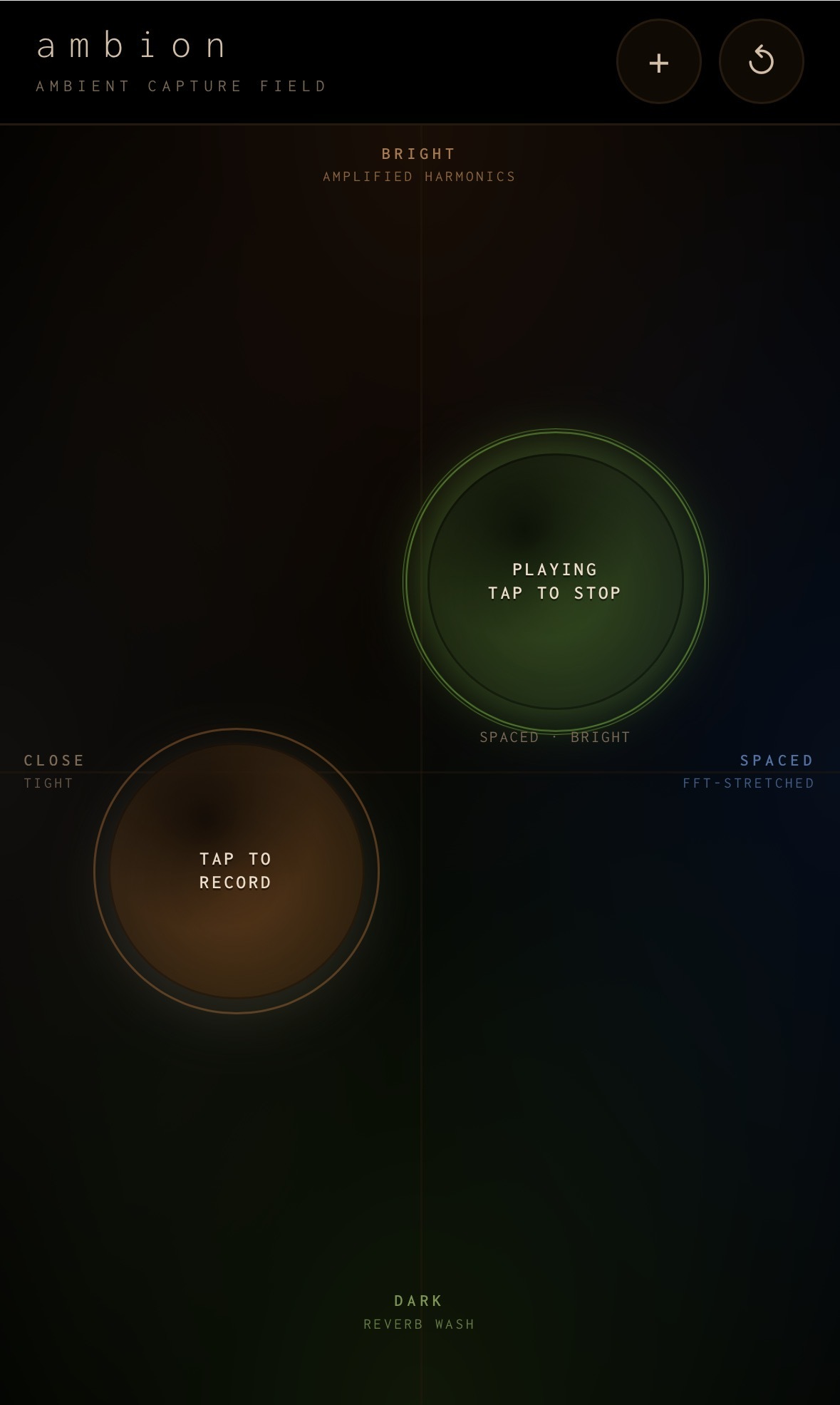
Ambion — the Ambient Capture Field — turns the phone into a tool for listening back to the room you are standing in. Tap an orb to record up to twenty seconds of the space around you.
The capture plays back grain-stretched, reverbed and pulled into amplified harmonics. Drag to reshape the wash, pinch to pitch it, and clone up to four orbs to layer separate captures into a slowly shifting drone.
It runs free in any mobile browser — no install, no account.
Tap to capture the room, then grain-stretch, reverberate and pull it into amplified harmonics
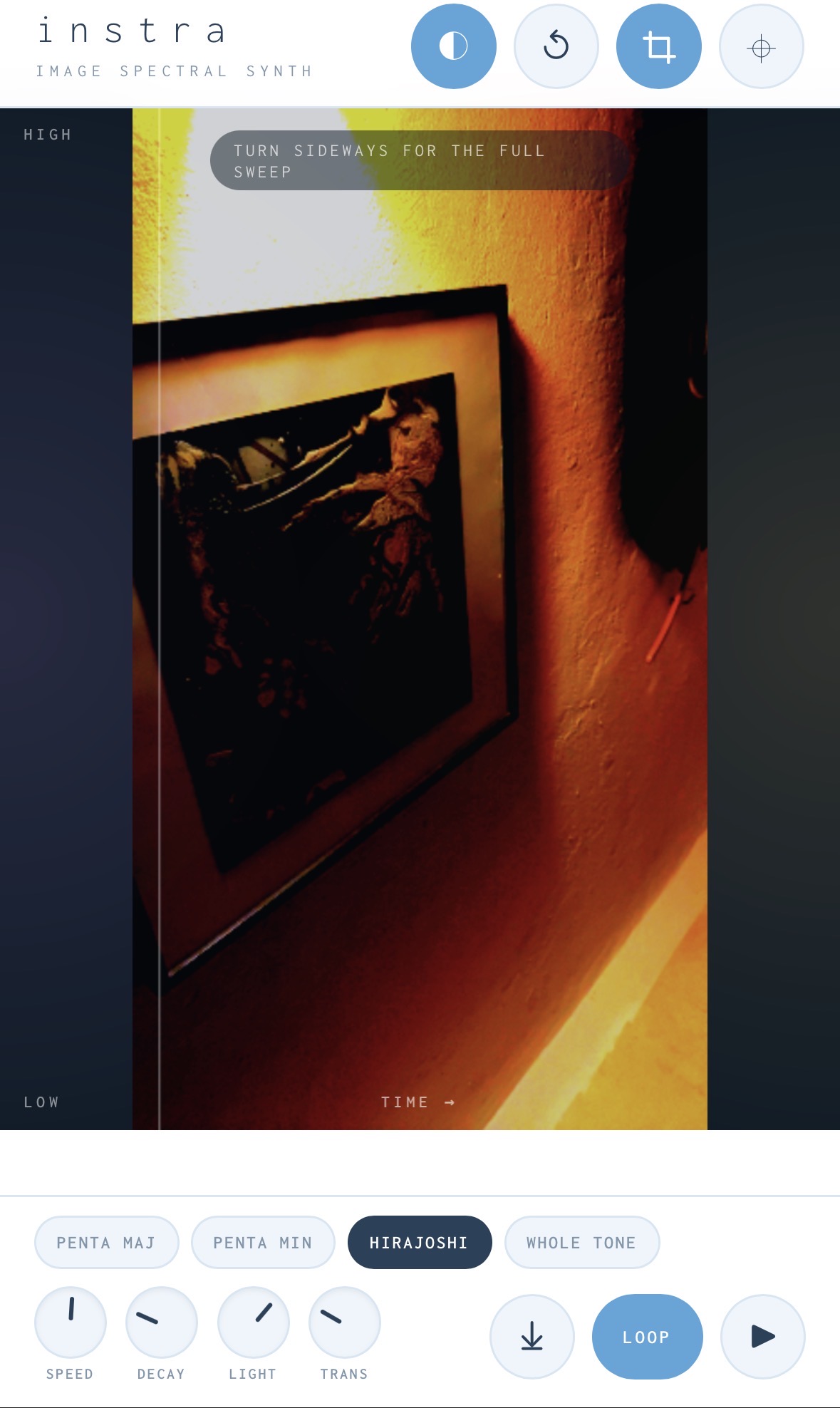
Instra — the Image Spectral Synth — lets you take a picture and hear it. Each image is read column by column, left to right, and sung back as a stack of sine waves.
Bright pixels become partials and height in the frame becomes pitch, all snapped to a scale. Press and slide the photo to sculpt its contrast and hue, choose a pentatonic, hirajoshi or whole-tone tuning, and set the read-out to loop or fire once.
It runs free in any browser, on mobile or desktop — no install, no account.
Take a picture and hear it — columns read left to right, bright pixels become partials, height becomes pitch
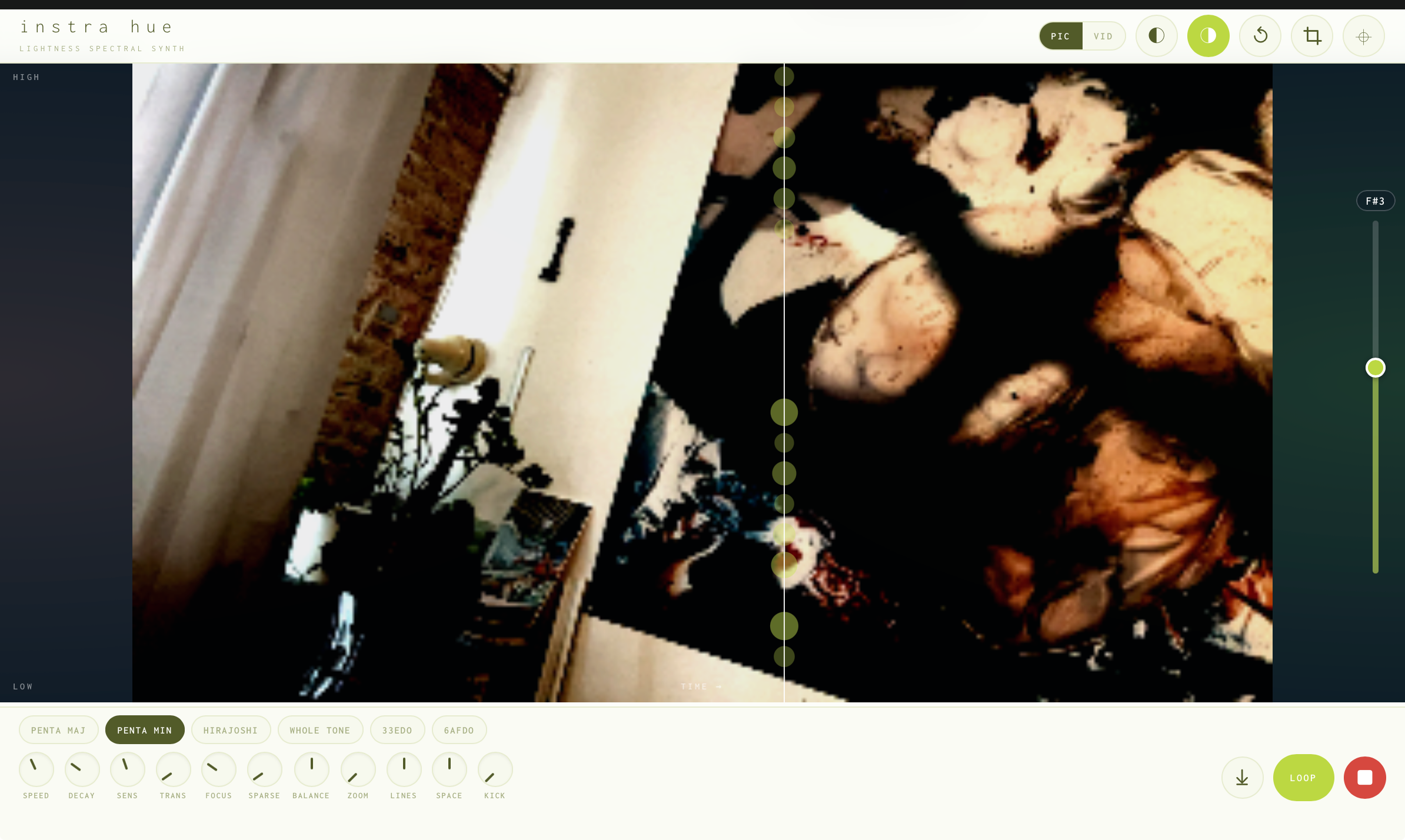
Instra Hue is a companion to Instra that listens to light itself. The photo is still read column by column, left to right, and sung back as a stack of sine waves — but here pitch follows lightness: the brighter a colour, the higher its note; the darker, the lower. A bright sky sings high while shadow hums low.
Press and slide the picture to push its contrast and shift its saturation, flip the mapping so darkness rings high, or record a ten-second clip and let the chord move as the picture does. Choose a scale, tilt the spectrum toward the lows or the highs, and rule the frame with bars for rhythm.
Like Instra, it runs free in any browser, on mobile or desktop — no install, no account.
Pitch follows the light — brighter colours ring higher, darker ones lower, each column a chord of brightnesses
A live set built for four speakers placed around the audience, where every sound is diffused radially — sources orbit, expand and collapse across the room rather than sitting on a stereo line. Spatial movement becomes the primary gesture: material is panned and rotated live so the music arrives from all directions at once.
Premiered at Public Records in New York — the first quadraphonic set ever performed in the venue. The set was built around usiq, driving a mix of broken drums and chopped acapella slices spatialised live across the four channels.
Drawing on the same spatial thinking behind SPF, the set is mixed in the round in real time — placement, distance and rotation are played as instruments alongside the sound itself.
During a residency at MONOM Sound, the work tested the frequency range and sound-pressure limits of their 4D system — building in complexity until the full spectrum of frequency and space was completely saturated.
The tests used orbital movement as rhythm, room-size oscillation, instrument scale, the Doppler effect as a melodic tool and spatial delays — mimicking shifting surroundings and creating distinct environments within a single room that transformed slowly over time. The compositions traced an evolutionary path from drone and rhythm toward classical and mainstream pop.
MONOM Sound — Funkhaus Berlin
A contribution to Bastien Thiery for his exhibition HUMPELFUCHS at Weserhalle. The collaboration stems from Ambisonic recordings made while walking the same path and timeframe that Bastien used to locate his subject — an injured fox he regularly photographed.
The field recordings over three nights have differing levels of weather, human traffic and pace. The resulting paths were documented and illustrated, made available online for use with headphones or earbuds, and presented as a quadraphonic installation at Weserhalle.
HUMPELFUCHS — Weserhalle Gallery, Berlin
Lock-in Amplifier / Phase Detector Model 121 — Princeton Applied Research
Release artwork
This work came from researching naturally occurring rhythms within one waveform, achieved by fine tuning a Lock-in Amplifier/Phase Detector Model 121 by Princeton Applied Research at Waveform Research Lab, WORM Studios Rotterdam.
During the research it became clear that if calibrated correctly, the LA/PD could potentially zoom-in on waveforms until encountering micro-rhythms and rhythmic phasing — a diverse collection of sounds resembling human-made rhythms found within a single waveform.
Recordings were released as a Biodigital format. Each sale funding a minimum of 80 trees with Eden Projects.
Three works share a single preoccupation — objects built to perform once and end themselves. Each sets the same terms: keep the thing intact and silent, or let it run to its conclusion and lose it.
Complt — A clay structure that descends a string suspended from the ceiling. Its centre of gravity was designed to pull the base toward the string; two strings set horizontally across the piece produce a harmonic drone as it slides slowly downward when released. Played to its end, the piece breaks itself, so the listener must keep resetting it — reset and loop the work, or allow it to reach its absolute ending.
SwansongVessel — A clay vessel with bone-conduction resonators attached inside. When activated, the resonators produce vibrations which resonate the vessel to produce sound until it shatters: keep something admired, intact and silent, or listen to it once and accept its mortality.
Soft Tissue — Impermanent materials chosen to create a time-based sculpture designed to unfold and degrade, its half-life determined by the weather. Two shapes were formed from plaster, cardboard and local newspapers to stand upright when folded, their folds joined with soluble plaster. Placed outdoors, the sculptures slowly unfolded and decayed over the course of three months.
Complt
SwansongVessel
Soft Tissue — slow unfolding and decay, 3 months outdoors
Composed as accompaniment to a performance piece by Amelia Emma Forrest. Inspired by low frequency sounds heard from within the human body, all sounds were sequenced from a single pulse.
The results were lathe cut to transparent vinyl encased in red soft-PVC, mimicking a fertilised egg in the womb. Each piece included the carved out sound representing the "negative" used to reproduce the recording. 30 units were produced.
"A journey of a nurturer in three parts constructed on a backwards timeline. The After symbolises the individual's adventure of finding oneself alone again. The Arising the adventure of the nurturer becoming a carer. The Conception symbolises the individual's prenatal adventure."
Customised transparent lathe cut · transparent vinyl
MT 01/30 — edition of 30
Glasgow's deep and fwd-looking techno loom twists out a pair of weightless-to-crunchy swang and ambient soul, parried by Vase & Conna Haraway in Department mode. Recorded in the Scottish Highlands, late summer '25, Department's eponymous union is a fine addition to a rich Scots lineage of deep electronic soul music with offbeat heft — as heard everywhere from BoC to Pub, Dave Clark projects and now these current standard bearers of future-facing club music, who share parallels in the wider scene with Hesaitix, Paperclip Minimiser or even Burial.
Call it ectosoul, in effect on the well-balanced transition from perfumed clouds of weightless bass into rudely pendulous, mid-tempo broken beat, and tougher breakstep on 'Cogent', before applying that anticipatory suss to an impressive ten-minute piece, 'Recovery', zooming in from widescreen ambient techno to glitching electronics, keys, and heart-in-mouth R&B vox like Alva Noto reworking deep Burial.
Department — Vase & Conna Haraway · INDEX021 · 2025
VASE contributes 'Gabe jor b' to The 1st Compilation — the inaugural various-artists collection from Berlin's Jukebox Baby Records, gathering a wide cast of the label's circle across a single sprawling tape. All proceeds from tape and Bandcamp sales through the end of 2025 were pledged to the Clean Shelter NGO.
Gabe jor b — VASE · The 1st Compilation · 2025
So far, the releases on INDEX:Records — from artists like Gi Gi, XENIA REAPER, Ike Zwanikken and others — have been crinkly and candlelit. The Glasgow label's latest pushes into comparably pummelling terrain.
Games's Quarter Tone Sub toys with choppy bass, reminiscent of trap from the 2010s. Translucent, broken-beat drums pound above hovering voices, glued together by dramatic compression. In spite of its abrupt nature, Quarter Tone Sub possesses a glassiness that makes me imagine a Black Dice track frozen beneath a thick sheet of ice.
games — Quarter Tone Sub · 2025
The holographic swarm that is Downstairs People returns with a sophomore album of subconscious songwriting. Simply titled DSP, it expands the group's surreal horoscope of Top 40 musings across nine works that explore the altered states of pop.
Distorted hooks, sour-candy production and cascading vocal harmonies — sung to us in no known language — make up an archive of warped transmissions from beyond our solar system, conveniently recorded and presented as a flat, spinning monolith. A brief history of having no time, and an ode to the subversive power of pop music. The cast features Special Guest DJ, Ben Bondy, Hysterical Love Project, and some other people they can't name for legal reasons.
Downstairs People — DSP · INDEX016 · 2024
'Sabotage' by Downstairs People appears on INDEXOXO<3, the third volume in INDEX:Records' Valentine's series of nocturnes — "a salve to soothe all burns of desire. For where there once was love, ever shall its void fill with longing." Final mix by Ike Zwanikken.
Sabotage — Downstairs People · INDEXOXO<3 · 2023
'FLACK7' is vase & Fray Mysterio's entry on INDEX:Promodisc01 — a promo-only disc gathering tracks from GOD69, vase & Fray Mysterio, Black Snake Whip and DJ SWEAT. Mastered by Ike Zwanikken.
FLACK7 — vase & Fray Mysterio · INDEX:Promodisc01 · 2022
VASE's 'Ache' features on INDEXOXOXL, the second in INDEX:Records' pan-sensory Valentine's series — "an atomised, sway-inducing solution to seduce and ensnare the most sated souls." Released 'pay as you feel' on Valentine's Day 2022, curated by Conna Haraway & King Softy and mastered by Ike Zwanikken.
Ache — VASE · INDEXOXOXL · 2022
"A system in which players engage in an artificial conflict, defined by rules, that results in a quantifiable outcome." — Salen & Zimmerman. The first Games release features moves by INDEX regulars blacksnakewhip and vase, with sax from JY Jong-Yun Lee (이종윤). It's jazz baby.
Games — games · INDEX:Records · 2021
Rumoured to have something to do with someone from the Experiences Ltd family alongside various other members of Berlin's underground fraternity, Downstairs People debut their skewed, blushing collective soul on Berlin / Manchester co-op INDEX:Records — RIYL Special Guest DJ, Steve Spacek, DJ Python, Fever Ray.
Not necessarily a sound one may readily associate with Berlin, Downstairs People craftily realign perceptions of R&B from the German city with a strong haul of ten tunes that naturally lean to the left, ambient side of that sound, but keep it remarkably on-point and effective. There are shades of what makes the music of D-Bridge and Steve Spacek tick, as well as shared mutual spirits with Space Afrika and DJ Python, but ultimately it's all characterised by the group's effortless, familial style — primed for loungin' on hot summer days in Berlin, Manchester or wherever you're relaxing.
No sharp edges or over-easy avant-ness spoil the flow; it's all laid out slow and syrupy with purring vocals and satin production that's easy to fall for. Between the slanted cloudrap channelling vintage Quasimoto in 'Some Music' and the floating R&B bumps of 'The Path', highlights run through the early Fever Ray-esque '2 Bedroom', the deftly heavy downstroke of 'Live', a classy piece of post-dubstep soul in 'Baby', and the autotuned hustle of 'Simulation'.
Downstairs People — Underground Pop · INDEX008 · 2021
vase's 'Spicy', featuring MCRD & King Softy, sits on INDEXOXO — the first of INDEX:Records' Valentine's compilations, "a prescription of sonic pheromones designed to soothe, arouse and awaken all sentient beings." Released 'pay as you feel'.
Spicy (ft. MCRD & King Softy) — vase · INDEXOXO · 2021
Amos' Flat is a three-part album by VASE in collaboration with Opal Tapes & INDEX:Records — "an odyssey of sonic manoeuvres through ambient, bass and IDM." Music written and produced by Jorge Camacho, with co-production from Lawrence Goodwin on 'BV133' and additional sounds drawn from Ash Turner's Metamorphosis sculpture.
Room 1 opened the album as a 12" LP via INDEX:Records in 2019. Room 1 & 2 followed the same year on double cassette through Opal Tapes. Room 3 closed the set in 2020 as a remix release on Opal Tapes and INDEX:Records, with 'In', 'Beech Tool' and 'Resolve' reworked by Pyur, Katsunori Sawa and Basic House — from Pyur's searing rework of 'In' to Basic House's slow radiophonic dismantling of 'Resolve'.
Amos' Flat: Room 1 / Room 1 & 2 / Room 3 — VASE · INDEX:Records & Opal Tapes · 2019–2020
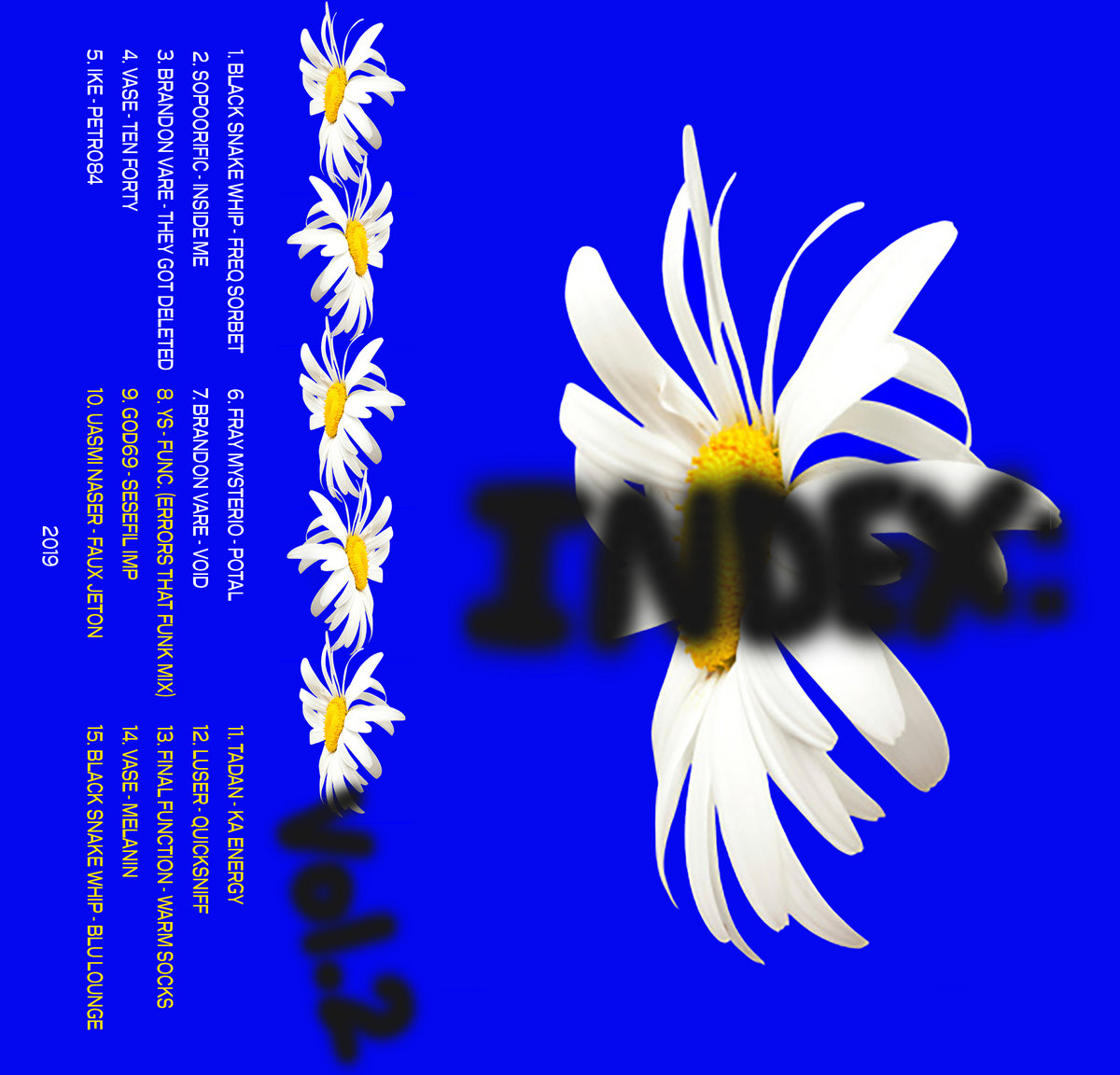
VASE's 'Ten Forty' appears on INDEX:Vol.2, the label's three-year retrospective — a start-to-finish compilation spanning late-night pulsations to healing post-party ambience, reaching from New Zealand and Australia to Singapore, Russia and across Europe. Mastered by King Softy and Latitude Audio.
Ten Forty — VASE · INDEX:Vol.2 · 2019
VASE's 'Content Locked' features on Amateur Vampires, the vast compilation marking Opal Tapes' 150th catalogue number — "a survey of names, new and old, whose work covers the gamut of tastes that Opal celebrates," where VASE balms proceedings with swung-out minimalist strokes of Cubano rattle.
Content Locked — VASE · Amateur Vampires · 2019
A full-length for Fis' Saplings Records, Lock Phase Variations draws from improvisations recorded at Rotterdam's WORM studios. Working from WORM's collection of waveform research tools, Jorge played a signal path of lock generation, phase detection and spectrum shaping — the residency research that feeds his ongoing "microrhythmics" practice. Released biodigitally, the record funds reforestation through Eden Reforestation Projects, with each sale planting a minimum of eighty trees.
VASE — Lock Phase Variations · Saplings Records · 2019
Written and produced by Jorge Camacho, Dorsal EP is a genre-bending 12" for Glasgow's INDEX:Records that folds layered ambience into rhythmic, IDM-leaning techno. Tracks like 'Aviolet' and 'Kinto' balance in an eclectic techno realm, music the label describes as suited to anywhere "from big industrial spaces to soft forest beds" — missing music found in a subaquatic cave.
VASE — Dorsal EP · INDEX:Records · 2018
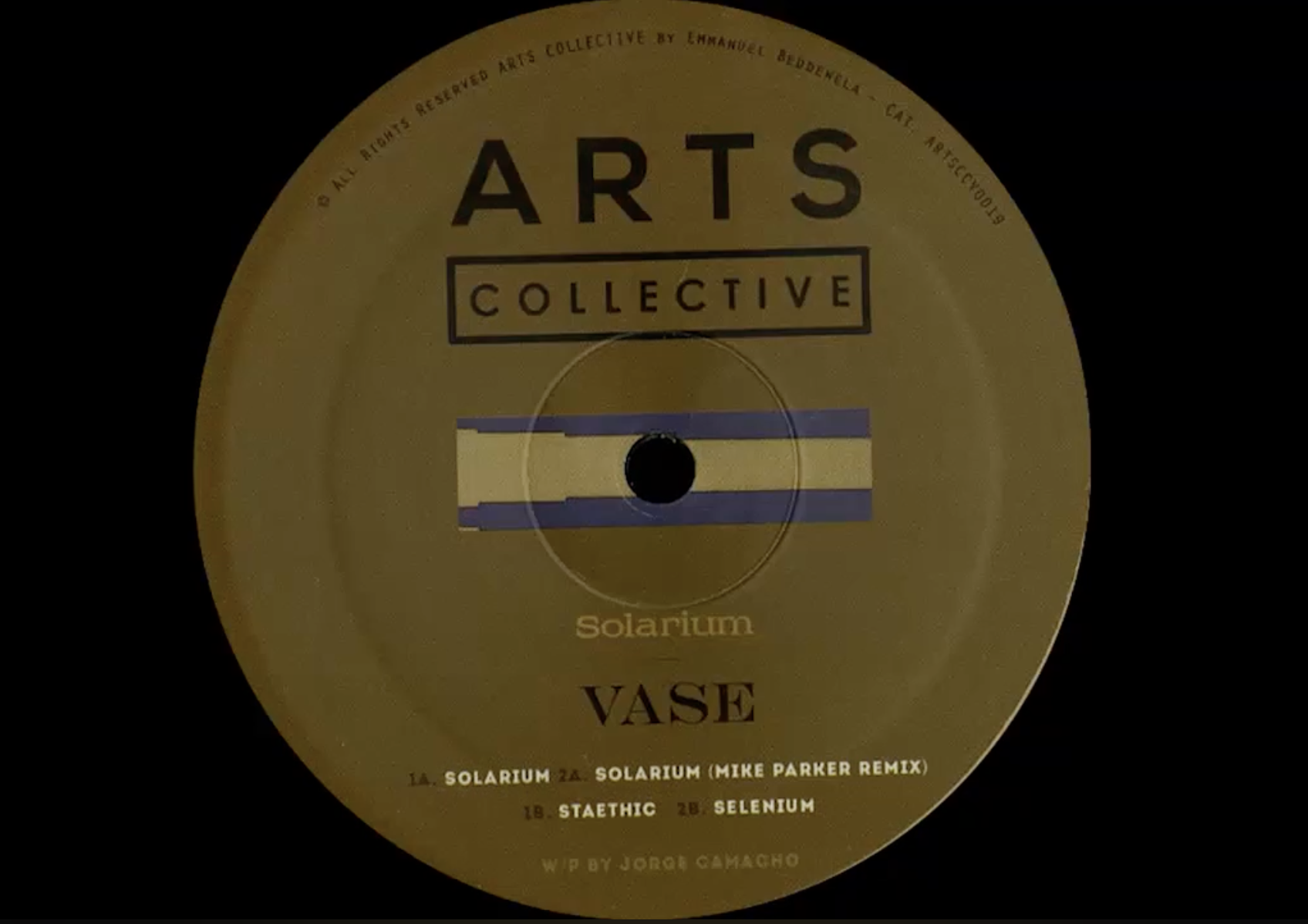
The debut release under the VASE alias, Solarium landed on the Rotterdam techno institution ARTS in 2017 — a portrait of the producer's mind in four parts. Three originals of patient, deep-tunnelled techno are paired with a remix from the hypnotic master Mike Parker, the whole record built on the idea that the simple act of paying attention can take you a long way.
VASE — Solarium · ARTS · 2017
Jorge Camacho is a sound designer, composer, and producer based in Berlin. A musician and sound artist with extensive professional experience in composition, mixing, and scoring.
Jorge's work at De School, MONOM's 4D Sound system, and the Waveform Research Center in Rotterdam shaped his approach to immersive installations and experimental sound design.
He's currently developing custom sound processing tools, composing for film and live performance, and creating performance pieces that merge audio and visual practice.